SUNY Poly Students Conduct Real World Research on New York's Cellphone Ban in Local High Schools
Published:
Monday, July 20, 2026 - 13:42
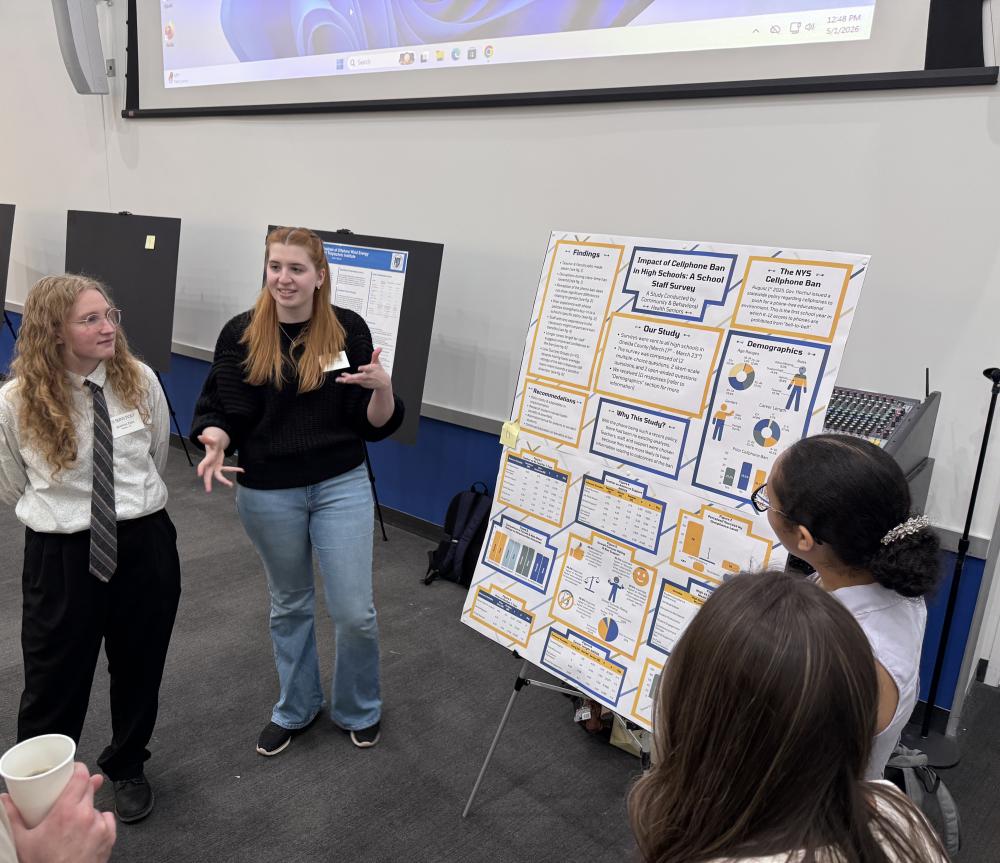
UTICA, NY – At SUNY Polytechnic Institute (SUNY Poly), students are not just learning research methods in the classroom. They are conducting research that addresses real world challenges and informs decisions in the communities they serve. Senior students in SUNY Poly's Community & Behavioral Health (CBH) program recently completed one of the first local studies examining the early effects of New York State's bell to bell cellphone ban in Oneida County high schools, providing valuable insights for educators, school leaders, and policymakers.
The study, The Impact of the NYS Cellphone Ban in Oneida County High Schools: A Study of School Staff Reactions & Perceptions, was conducted by senior students in SUNY Poly's CBH program under the leadership of Assistant Professor Dr. Jarrett Rose. The project combined qualitative interviews and quantitative survey research to assess educator perspectives during the first year of policy implementation.
Drawing on interviews with school administrators and educators and survey responses from 111 teachers, administrators, and staff members across Oneida County high schools, the study found broad support for the cellphone ban and identified perceived improvements in student engagement, classroom focus, social interaction, and behavior. The findings also highlighted areas requiring further research, including academic outcomes, bullying, and long-term student well-being.
“This project gave our students the opportunity to conduct timely, community-focused research on an issue affecting schools across New York State,” said Dr. Rose. “We are proud of what they accomplished and grateful for the educators and school leaders who shared their experiences with us. Our students were not simply learning about research methods—they were generating knowledge that can inform practice, policy, and future scholarship.”
The research team included recent CBH graduates Hannah C. Reese, Cullen Elliott, Dezeraiah Bellamy, Samantha Dee, Isabella Schaffer, Ashton Paul, and Madison Altamura. SUNY Poly Postdoctoral Researcher Dr. Winnie Mkandawire served as the study’s data analyst.
The report will be shared with educational stakeholders throughout Oneida County, including superintendents, principals, teachers, and school staff who participated in and informed the research, as well as the Governor’s Office. Building on the project’s initial findings, Rose is now working with faculty colleagues from SUNY Poly's Colleges of Health Sciences and Arts & Sciences, along with the recent CBH graduates, to develop the study into a scholarly manuscript for submission to a peer-reviewed education journal.
“This project reflects the strength of applied learning in the College of Health Sciences,” said Dr. Mark Kittleson, Dean of SUNY Poly's College of Health Sciences. “It shows how students can use research to engage directly with community partners, examine real-world public health and behavioral health questions, and contribute meaningful insights to issues affecting our region.”
Dr. Babak Elahi, Dean of SUNY Poly's College of Arts & Sciences, added, “As this work moves toward scholarly publication, it also demonstrates the interdisciplinary impact of SUNY Poly. By bringing together health sciences, social research, education, and community engagement, projects like this prepare students and faculty to address complex challenges through collaboration.”
While the study found strong perceived benefits in classroom engagement and student socialization, researchers noted that the findings represent an early assessment based on staff perceptions and emphasized the need for continued research to better understand the long-term effects of cellphone restrictions in schools.
The report provides local educators, policymakers, and community stakeholders with valuable insight into how the statewide policy is being experienced during its first year of implementation and offers recommendations for future research and policy development. The project also demonstrates how undergraduate students can contribute meaningfully to research that serves both local communities and broader academic conversations.