
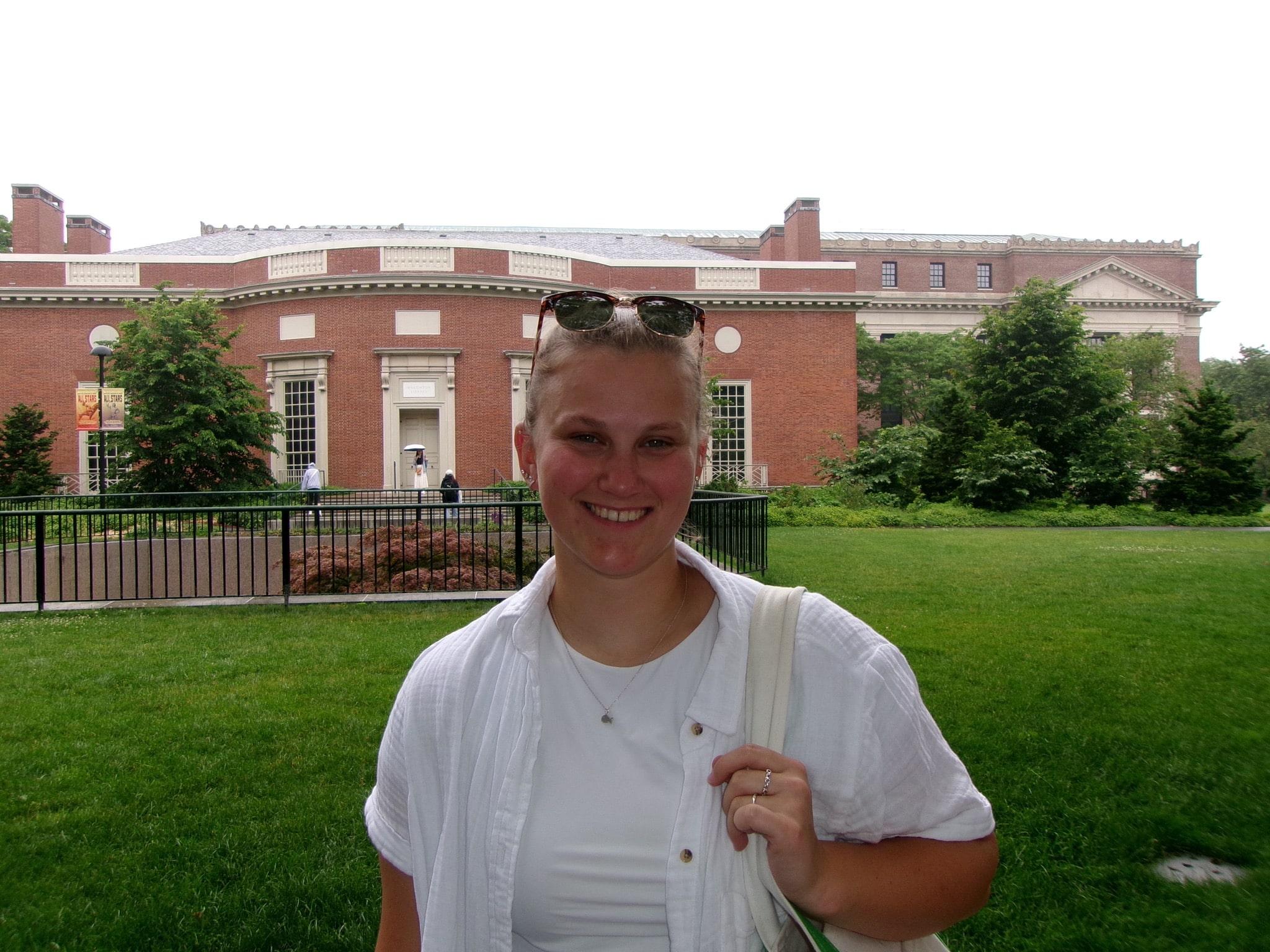
Rylie Fischer ‘26
Read More
When I came to SUNY Poly, I was unsure of the academic path that would be best for me. I was undeclared and leaning towards a biology major. My first two semesters (Fall 2022/Spring 2023), I took courses aligned with that track, like Chemistry, and Biology. It was during this spring semester, while taking a biology course, that I had realized that I wasn’t enjoying the direction I was headed. At the same time, I discovered how much I truly enjoyed mathematics. I declared Applied Mathematics as my major and, thanks to the physics courses I had already taken, I also realized how fascinating physics was. Soon after, I declared a minor in physics.
Although I had found a passion for physics, I needed to focus on requirements for my new major and had to step away from physics for a semester. That break made returning to Intermediate Mechanics the following spring more challenging, but it also reminded me how rewarding the subject is. Physics courses demand focus and effort, but I was genuinely excited to attend class and keep learning.
The coursework in the physics minor is not the only thing that makes it special, it is the department itself. The physics program at SUNY Poly is small, and throughout my courses, I was lucky enough to have the same two professors. This gave me the opportunity to build meaningful relationships with them. Also being a student-athlete with a busy schedule, the physics department was especially understanding and did everything they could to help me succeed.
In taking the physics courses required for the minor, I was able to study a wide range of topics, including Modern Physics, Intermediate Mechanics, Waves and Optics, Electromagnetism, and Computational Physics. Each course was distinct, and together they broadened my knowledge in ways I hadn’t anticipated. None of them were easy, but the effort I put in was worth it.
Taking these courses not only expanded my academic knowledge but also gave me tremendous personal growth. At first, taking these courses challenged my confidence. I had never struggled to understand a course the same way. Many people assume that since I have a minor in physics, that it comes easy to me, but that could not be further from the truth. Physics is a very challenging subject; I will be the first to admit that. But I did not let this halt my passion and interest for it. I put in a lot of time to fully understand each one of the courses I took for this minor. Of all the courses I have taken at SUNY Poly so far, I can confidently say that I was most proud of my results in these physics courses. Looking back, I am grateful I chose this path.
Although my plans for the future are in actuarial mathematics and physics may not directly apply to my career, pursuing this minor has been incredibly valuable. It not only expanded my understanding of the world but also showed me what I am capable of achieving.
Anthony DeVasto ‘24
Read More
After beginning at SUNY Poly as an Applied Mathematics major, Anthony DeVasto ‘24 discovered a passion for physics that ultimately inspired him to pursue graduate study. Through the Physics minor, he gained experience as a teaching assistant and conducted research on neutron stars with faculty mentorship, culminating in the opportunity to present his work at an international physics conference. He credits the program’s faculty, research opportunities, and supportive environment with transforming his academic interests and helping him discover a path he is passionate about.
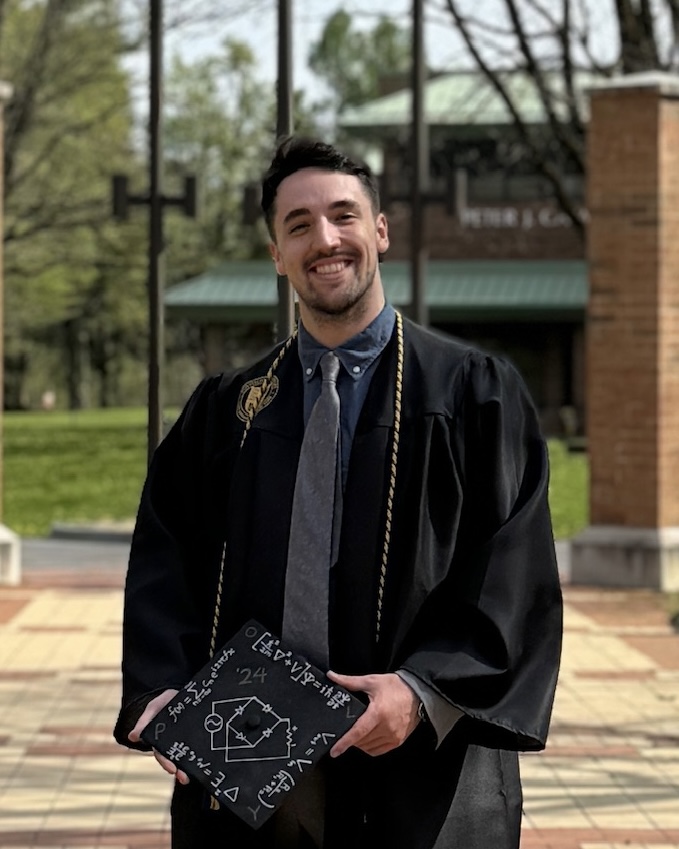
Thomas Morell ‘24
Read More
Thomas Morell ’24 discovered a passion for physics while pursuing his degree in Electrical and Computer Engineering. Adding a Physics minor deepened his understanding of engineering concepts, strengthened his confidence, and opened opportunities to serve as a teaching assistant, excel in an engineering internship, and apply his knowledge to award-winning senior projects. He credits the program’s challenging coursework and supportive faculty with transforming his academic experience and preparing him for future success.
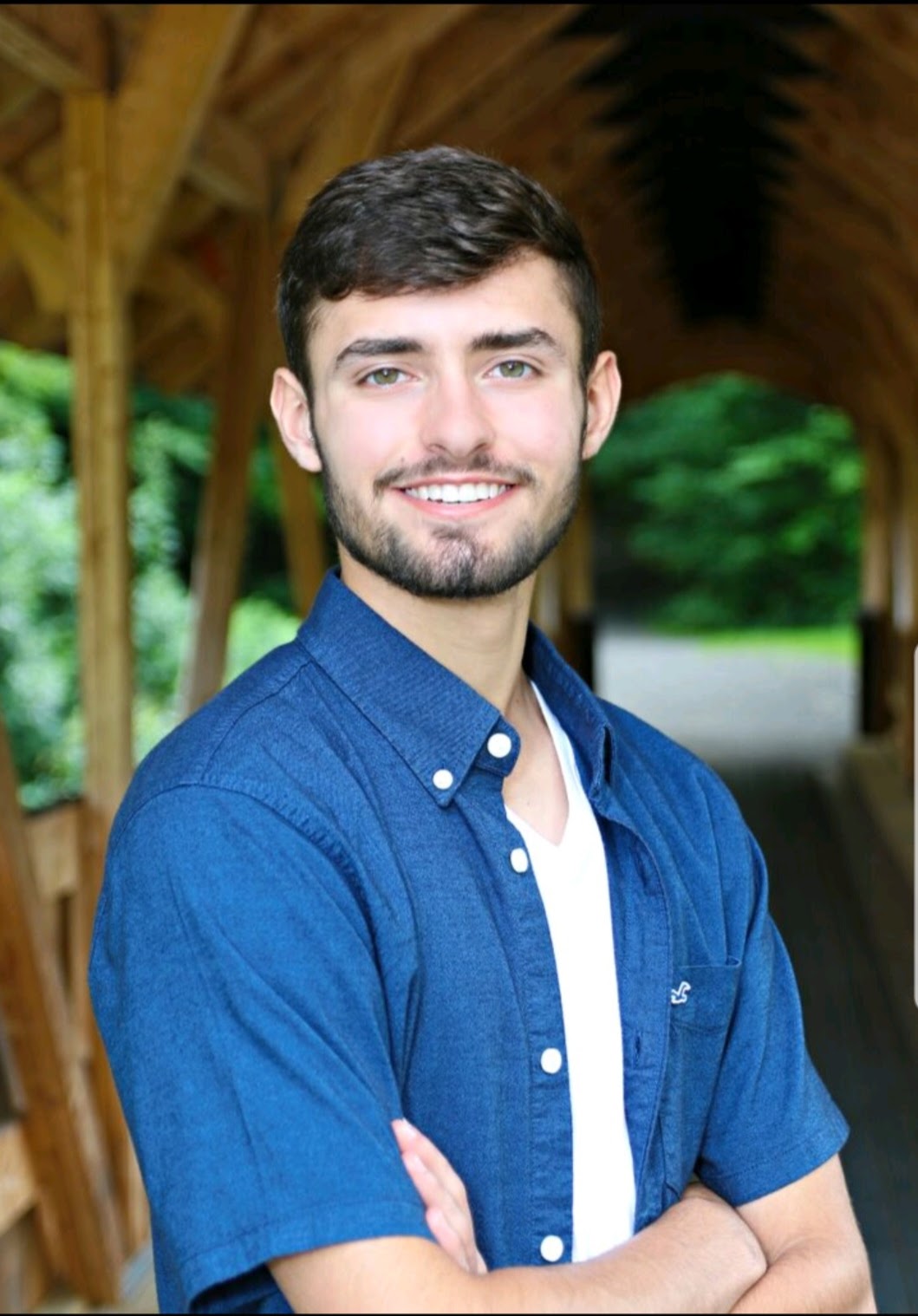
Zackary Amo ‘23
Read More
While completing his Applied Mathematics degree at SUNY Poly, Zackary Amo ‘23 discovered an interest in physics and pursued the Physics minor to further explore the connection between mathematics and the physical world. Through challenging coursework, an independent research project, and experience as a teaching assistant, he strengthened his critical thinking, mathematical modeling, and communication skills. After graduating, he began working as a Software Engineer at BAE Systems while pursuing a master’s degree in computer science, with the goal of applying his background in physics, mathematics, and computing to real-world artificial intelligence systems.
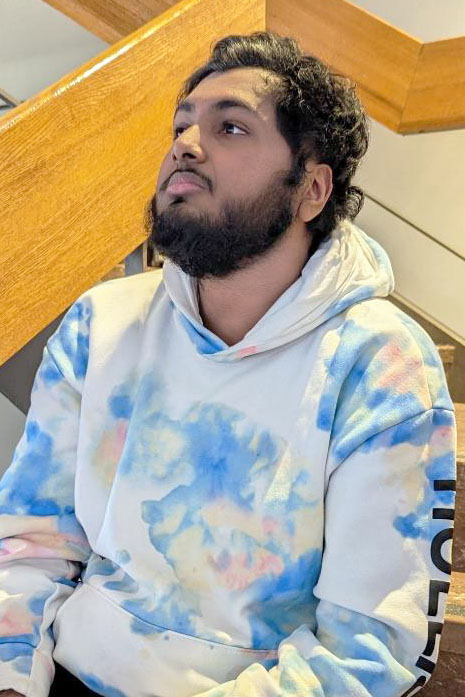
Kais Sheikh ‘23
Read More
After beginning at SUNY Poly in Computer Engineering Technology, Kais Sheikh ‘23 added Applied Mathematics as a second major and discovered a growing interest in physics. Upper-level physics coursework helped him connect concepts across mathematics, engineering, and the physical sciences while challenging him to strengthen his analytical and problem-solving skills. Through advanced projects and experience as a teaching assistant, he deepened his understanding of physics while discovering an interest in helping others learn.
Jonathon Miller ‘21
Read More
What began as required physics coursework became one of the most influential parts of Jonathon Miller’s ‘21 SUNY Poly experience. He embraced the challenge of upper-level courses and project-based learning, including an electrodynamics project exploring the motion of charged particles. Serving as a physics teaching assistant also sparked an interest in mentoring others. After graduation, his extensive physics background helped him secure his first position with the government and influenced his decision to pursue further study in applied electrodynamics.
David Zemanek ‘21
Read More
Pairing a Physics minor with Electrical and Computer Engineering gave David Zemanek ‘21 a deeper understanding of concepts that crossed both disciplines while sharpening his approach to complex problems. Beyond the classroom, he led weekly recitations as a physics teaching assistant and completed advanced projects exploring topics such as the Doppler effect and quantum Hall effect. He found the combination of challenging coursework, independent exploration, and a collaborative department especially valuable in building his confidence, critical thinking, and professional skills.
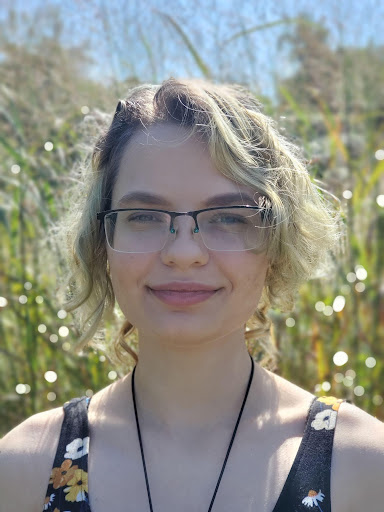
Mars Lyukova ‘19
Read More
Mars Lyukova’s ‘19 path to physics began with interests in computer science, electrical engineering, and mathematics, but a required physics course sparked an interest that grew into advanced study and publishable undergraduate research. Now a Physics Ph.D. student at Stony Brook University working with the ATLAS Experiment at CERN, she draws directly on the computational research experience she gained at SUNY Poly. Her experience as a teaching assistant also fostered a passion for teaching and a goal of becoming a physics professor.
Riley Christopher ‘18
Read More
Physics helped turn Riley Christopher’s ‘18 interest in electrical and computer engineering into a clear direction for graduate study and a career in device engineering. After SUNY Poly, he became a graduate research assistant at the University of Virginia, where his work ranged from advanced materials to circuit-based optimization research. Today, he applies that foundation in the semiconductor industry as a yield engineer at Micron, using advanced imaging techniques to identify defects in memory chips and nanoscale transistors.
Alden Koch ‘18
Read More
Alden Koch’s ‘18 Physics minor became a turning point in how he engaged with his education, building skills in mathematical modeling, complex problem-solving, and teaching that ultimately influenced his decision to pursue graduate study. After earning his B.S. in Electrical Engineering from SUNY Poly, he completed an M.S. in Biomedical Engineering at the University of Michigan. He now applies his interdisciplinary background in a materials science lab, using electron microscopy to research the nanostructure of biomineral systems.
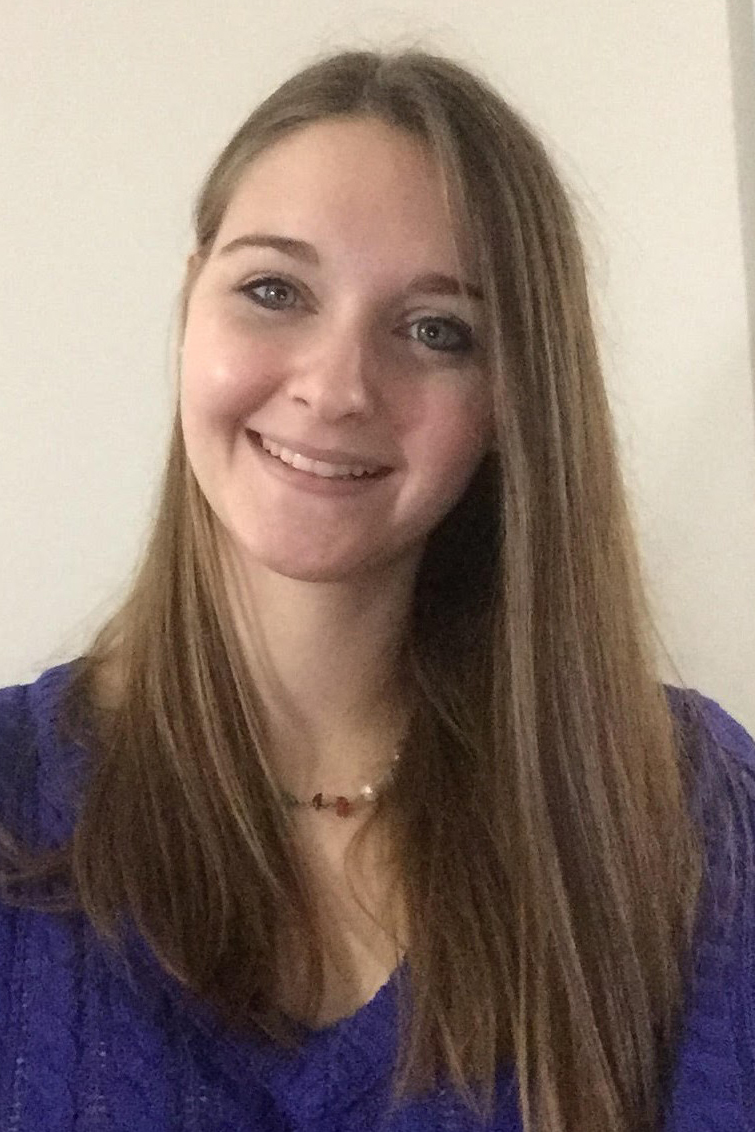
Rebecca Sheely ‘17
Read More
Rebecca Sheely ’17 applies physics every day in her career as a structural engineer, designing buildings and assessing existing structures. After earning her B.S. in Civil Engineering with a Physics minor from SUNY Poly, she completed a master’s degree in Structural Engineering at the University at Buffalo. She credits her physics coursework and experience as a teaching assistant with strengthening her understanding of mechanics, preparing her for graduate study, and sparking an interest in teaching that she continues today through tutoring.
