Driving Discovery at SUNY Poly: How Dr. Tabiri Asumadu and GCAMM Are Advancing Biomedical Research
Published:
Friday, May 22, 2026 - 13:58
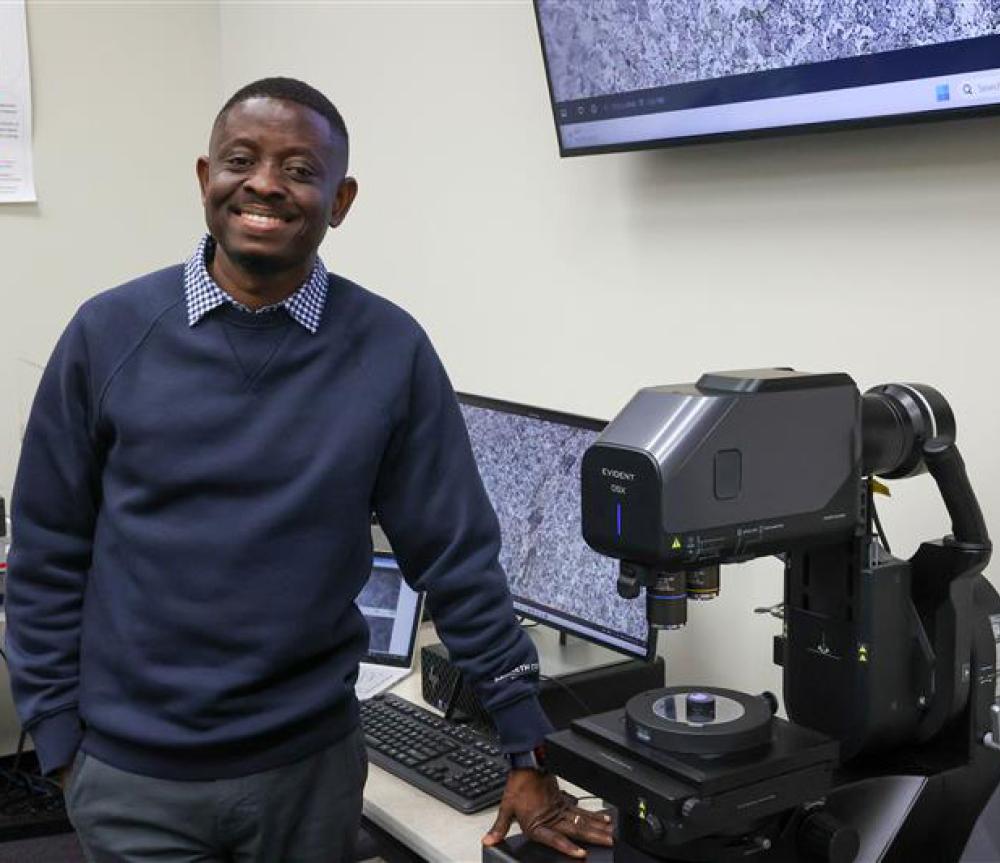
At SUNY Polytechnic Institute’s (SUNY Poly) Global Center for Advanced Materials and Manufacturing (GCAMM), researchers are exploring how advanced materials, machine learning, and biomedical engineering can solve some of society’s most pressing challenges, from safer implants to improved cancer detection and treatment. At the center of much of that work is Dr. Tabiri Asumadu, associate director of GCAMM.
Since arriving at SUNY Poly in 2023 following research appointments at Worcester Polytechnic Institute and years of academic leadership in Ghana, Asumadu has helped shape GCAMM into a growing hub for interdisciplinary innovation. Led by SUNY Poly President Dr. Winston Soboyejo as principal investigator, the center brings together faculty, postdoctoral researchers, and students from engineering, computer science, biology, and related disciplines to pursue collaborative research with real-world impact.
“President Soboyejo meets with all the groups weekly to review projects and provide direction,” Asumadu explained during a recent interview. “My role as associate director is helping manage the day-to-day research activities and making sure everything moves forward.”
The center’s work spans three major focus areas: biomedical materials and devices, advanced energy technologies, and advanced manufacturing and materials research. Since its launch, GCAMM-affiliated researchers have produced at least 16 peer-reviewed papers, alongside patents, conference presentations, and industry collaborations.
Among the most promising efforts is GCAMM’s biomedical research, which focuses on improving implant performance and accelerating healing. One major project centers on titanium-based biomedical and dental implants coated with hydroxyapatite nanostructures extracted from bovine bone and eggshell waste materials.
Hydroxyapatite is a naturally occurring mineral found in human teeth and bones. By depositing nanoscale hydroxyapatite structures onto titanium alloy surfaces, researchers are creating implants that dramatically improve cell adhesion and osseointegration — the process by which implants bond with the body.
“Normally, cells can take weeks to spread and attach to implant surfaces,” Asumadu said. “With the surfaces we are developing, we are seeing cell activity happen within hours.”
The implications could be significant. Faster osseointegration may reduce recovery time, decrease pain, and lower the likelihood of implant failure. The work builds on recent SUNY Poly publications examining hydroxyapatite-coated titanium alloys and biomedical nanostructures, while also expanding opportunities for future clinical applications.
GCAMM researchers are also applying artificial intelligence and machine learning to cancer research in New York State. This includes work on the development of targeted nanoparticles and machine learning approaches for the detection of breast cancer. GCAMM is also working on targeted cancer drugs for the localized treatment of breast cancer.
Outside the biomedical space, GCAMM’s energy research focuses heavily on next-generation solid-state batteries and flexible organic solar cells. Researchers are developing safer alternatives to traditional lithium-ion batteries by eliminating liquid electrolytes and designing all-solid systems with improved stability and storage capacity.
At the same time, the center is advancing research into wearable and foldable perovskite solar cells capable of powering everyday devices. One major challenge is improving the durability of these organic solar technologies, an issue GCAMM researchers are addressing through materials engineering and machine learning-guided design.
GCAMM’s third major area — advanced manufacturing and materials research — includes work on graphene production, superlubricity, alloy development, and additive manufacturing. Asumadu’s own research has contributed to patented methods for producing graphene coatings from biowaste materials such as leaves, creating ultra-low-friction surfaces for aerospace, automotive, semiconductor, and biomedical applications.
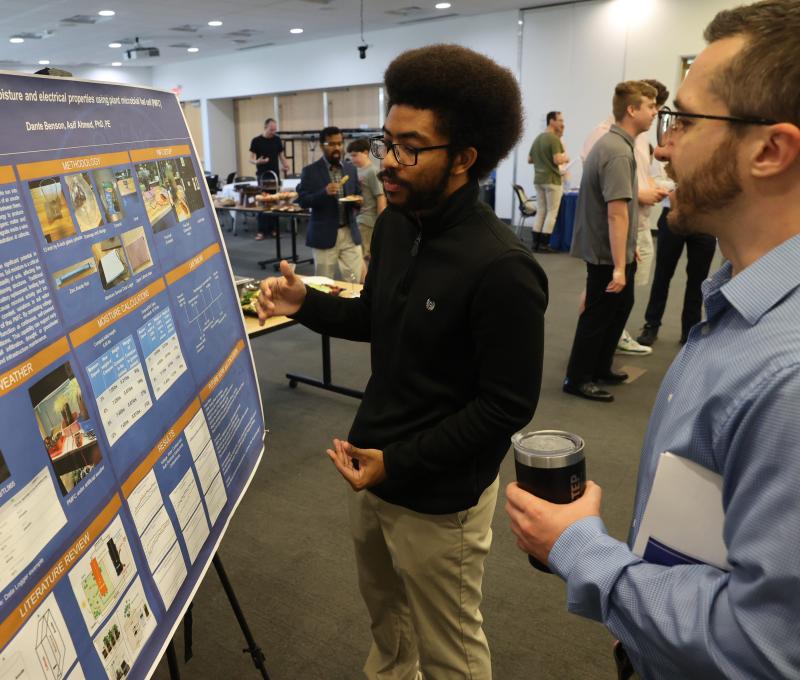
The center’s influence extends beyond research publications. GCAMM currently involves approximately 10 SUNY Poly undergraduate researchers from disciplines including biology, computer science, civil engineering, and mechanical engineering. Many students work directly on machine learning-driven projects designed to prepare them for emerging industry demands.
“We break the research into smaller projects students can contribute to,” Asumadu said. “Their work becomes part of a much bigger picture.”
As GCAMM continues to grow through new partnerships, patents, and research initiatives, SUNY Poly is positioning itself at the forefront of advanced materials and biomedical innovation, with Asumadu helping to guide that momentum forward.