Dr. Leung and Student Collaborators Publish Continuing Research Series on Cosmic Chemical Evolution
Published:
Friday, May 15, 2026 - 15:29
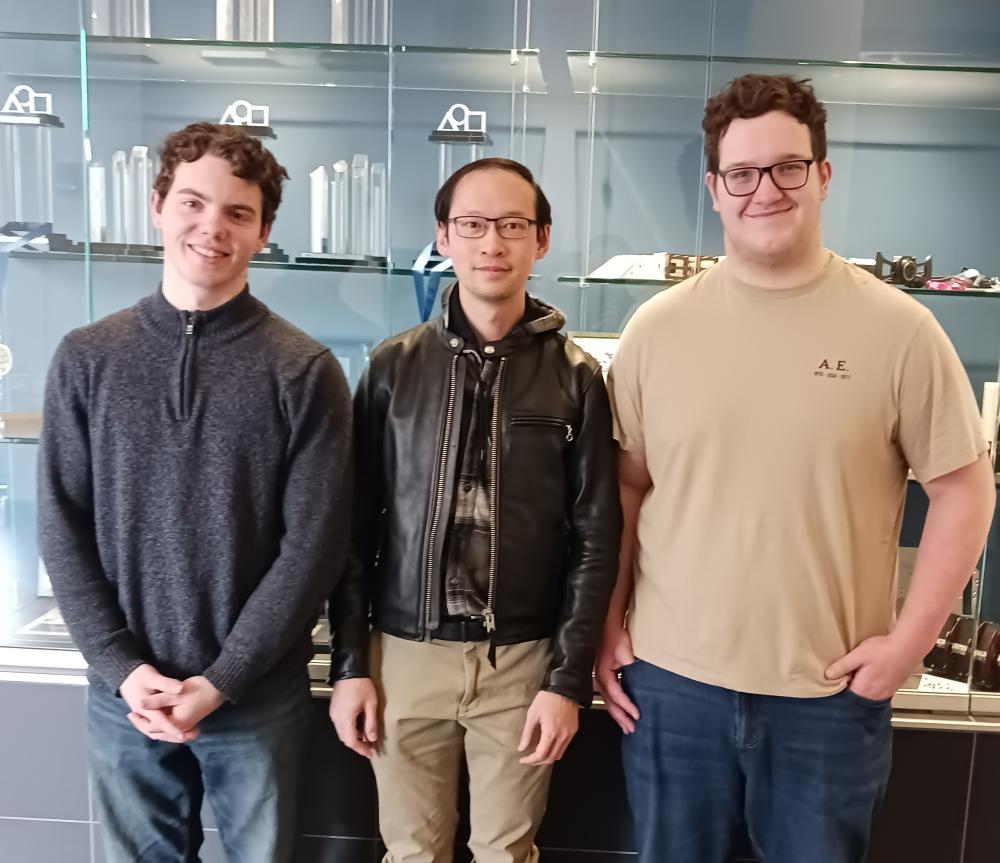
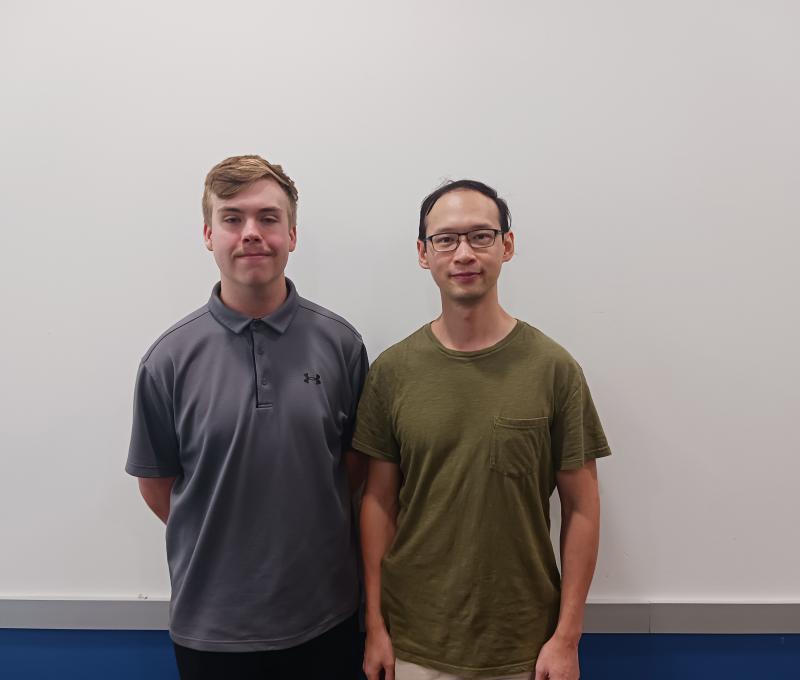
SUNY Polytechnic Institute (SUNY Poly) Assistant Professor of Physics Dr. Shing-Chi Leung, together with students Henry Yerdon and Seth Walther, published an article in The Astrophysical Journal titled, “Revisiting the Perseus Cluster III: Role of Aspherical Explosions on its Chemical Composition and Extension to Metal-Poor Stars and Galaxies,” (ApJ 1001, 73, 2026). The article is also co-authored by Dr. Ken’ichi Nomoto, Professor Emeritus at the Kavli Institute for the Physics and Mathematics of the Universe (Kavli IPMU) at The University of Tokyo, and Dr. Aurora Simionescu, Senior Scientist at the Netherlands Institute for Space Research (SRON).
Deep within the Perseus Constellation lies one of the most massive structures known to science: the Perseus Cluster. A titan of the cosmos, it anchors more than a thousand galaxies within a sea of superheated gas known as the intracluster medium (ICM). This gas, glowing intensely in X-rays, acts as a celestial ledger, recording the chemical “fingerprints” left behind by billions of supernova explosions over billions of years.
However, data from the Hitomi (Astro-H) space telescope revealed a profound mystery: long-standing theoretical models cannot fully explain the cluster. The observations showed levels of silicon, sulphur, argon, and calcium that did not match our understanding of how massive stars — those at least ten times the mass of our Sun — live and die. This discrepancy signaled a need to rebuild models of stellar evolution from the ground up.
To address this problem, the research team embarked on a comprehensive multi-stage study. In Paper I, the team developed new models for massive stars that aligned with the chemical abundances of silicon, sulphur, argon, and calcium observed in the Perseus Cluster. The team expanded this work in Paper II, creating a large catalog of star models spanning a wide range of masses (15 to 60 solar masses) and metallicities — the initial chemical makeup of a star determined by its age in the universe. By processing this catalog through a galactic chemical evolution pipeline, the researchers reconstructed more than 10 billion years of supernova feedback that shaped the chemical patterns observed today.
In Paper III, the team considered the extreme case in which a supernova explodes in a bipolar jet form. This phenomenon occurs when stars rotate rapidly, resulting in a rapidly rotating black hole or neutron star. The rotating accretion disk surrounding the compact object can trigger magnetorotational instabilities that produce powerful jets. The team performed multi-dimensional simulations to trace how the jets trigger outbursts and subsequent explosions. They discovered that the pronounced production of zinc could serve as an important marker for determining the fraction of these extreme events that occurred in the early universe. By comparing observed zinc abundances in galactic and metal-poor stars with the overall galactic zinc budget, the team calculated the fraction of stars that explode in this aspherical form.
The participating students, both Physics minors, joined the research team in summer 2024 (Seth) and spring 2025 (Henry). They contributed to key calculations and authored sections related to their analyses.
Seth shared how the research experience supported his learning at SUNY Poly: “Participating in undergraduate research has greatly strengthened my ability to write at a higher scientific standard. I believe this puts me at an advantage over my peers, as many do not learn the same writing standards and procedures. Research writing is truly unlike any other paper you would write in a basic communication or English class. Furthermore, being involved in multiple physics research projects has strengthened my confidence in my undergraduate studies. College can be a risky investment if you do not make the most of it. In particular, my work with Dr. Leung has greatly improved my college experience and my abilities as a student. I truly believe my investment has been worth it because of the research I have been able to do. I am forever grateful.”
Henry also discussed how he developed new skills from the research project beyond physics: “My experience with research has shown me a side of physics much different from what you see in a typical physics course. In a physics course, we discuss many topics within one overarching subject. In research, we take a much deeper look into a single topic. Through research, I have gained a stronger understanding and appreciation for the study of galactic chemical evolution and physics in general. Since beginning research, I have become more motivated in both my physics courses and courses beyond my physics education. I also have a greater appreciation for the physicists before me who developed the strong foundation of knowledge that supported this project.
“This experience has also helped me progress in my major. The research required extensive programming to perform calculations, interpret data, and create plots," Henry added. "Beyond the academic skills I gained, the project also pushed me to improve my time management, problem-solving, and collaboration skills in ways that typical coursework never would have. I am extremely grateful for the experience Dr. Leung has provided me. He has taught me many things, both in physics and in skills that I will continue to use long after I graduate. I could not recommend pursuing research to other students enough.”
The team noted that the final phase of the project will continue to examine how these supernova models influence chemical enrichment processes on a galactic scale.
This project is supported by the National Science Foundation under grant AST-2316807.