 The Center for Smart Infrastructure and Sustainability (CSIS) dedicates to advancing research, technology, education, and policies that promote intelligent and sustainable infrastructure development. By leveraging interdisciplinary collaboration and cutting-edge technologies, CSIS will serve as a catalyst for transformative change towards a more resilient and sustainable future. CSIS endeavors to develop a distinctive and high-impact array of activities, guided by the following vision, mission, and values, aimed at making a positive difference for stakeholders and the broader community:
Vision: To elevate SUNY Polytechnic Institute as a national leader in advancing innovative solutions for resilient, intelligent, and sustainable infrastructure systems
Mission: The center synthesizes efforts across the university to advance research, education, and innovation in the development and management of infrastructure systems that are intelligent, resilient, and sustainable that contributes to the well-being of society and the planet.
Values: Innovation, Community, Education, Inclusion, Collaboration
Research Themes
CSIS integrates expertise in structural engineering, energy systems, artificial intelligence, digital modeling, sustainability, and community engagement to address critical challenges facing infrastructure in the 21st century.
Guided by its Advisory Board, CSIS has consolidated its expertise into three distinctive, high-impact research themes to strengthen global benchmarking, enhance competitiveness, and amplify societal impact.
Focus: Multi-hazard resilience of critical infrastructure supporting the energy transition.
Scope:
- Climate-resilient infrastructure subjected to extreme wind, seismic, flood, fire, and cascading hazards
- Offshore and onshore renewable energy systems, including wind and grid-interactive infrastructure
- Infrastructure performance under coupled physical, environmental, and operational stresses
- Reliability, risk, and resilience metrics for energy and civil infrastructure systems
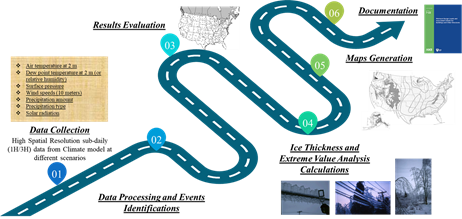
Atmospheric Icing and Infrastructure Risk
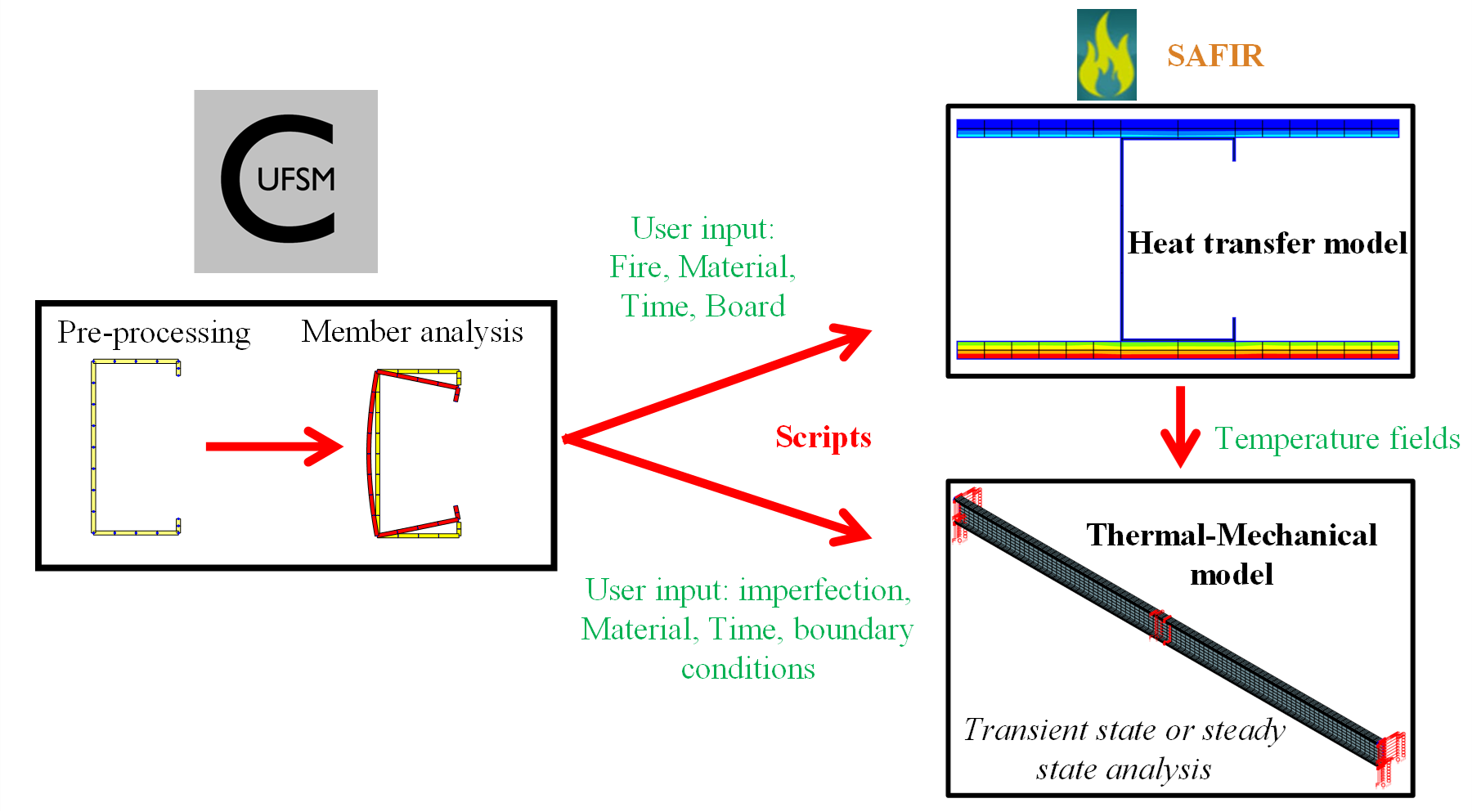
Fire modeling: automatized CUFSM-SAFIR interfacing for CFS member analysis under fire
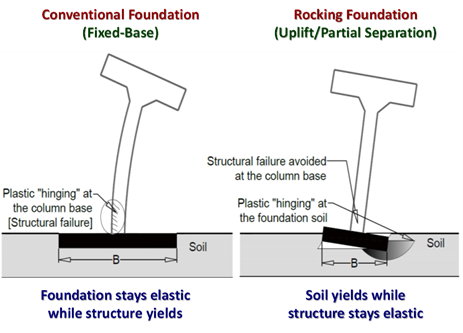
Geotechnical seismic isolation, damping, and protection using rocking foundations
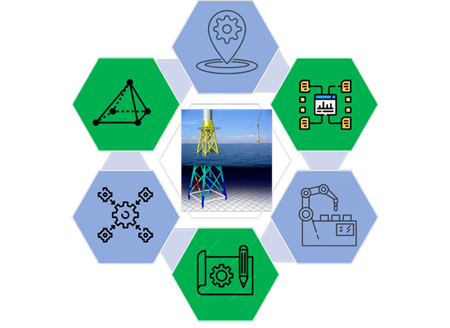
Offshore wind foundation: an integrated design with modeling, optimization, and fabrication
Focus: Smart infrastructure enabled by sensing, data, and artificial intelligence for lifecycle decision-making.
Scope:
- AI- and ML-enabled modeling, monitoring, and digital twin technologies
- Smart sensing, structural health monitoring (SHM), and autonomous inspection systems
- Integrated simulation, automation, and physics-guided machine learning
- Decision-support tools for infrastructure design, operation, and asset management
- Smart communities and cities
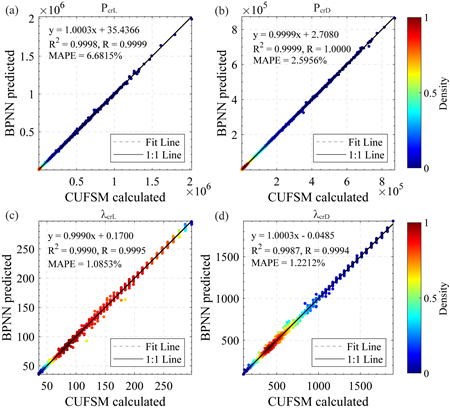
ML-enabled modeling: Prediction of member stability behavior
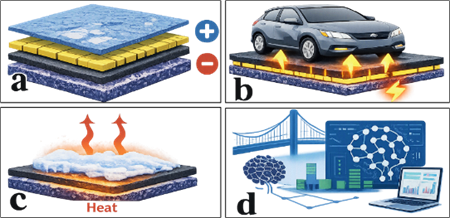
Smart sensing: self-powered sensor for intelligent infrastructure control
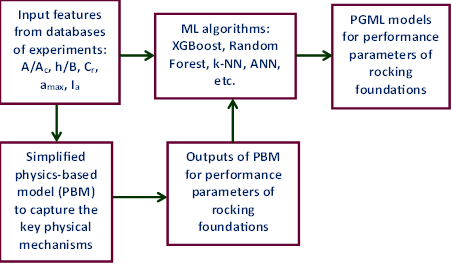
Physics-guided machine learning (PGML) based modeling of rocking foundations: Combination-based approach
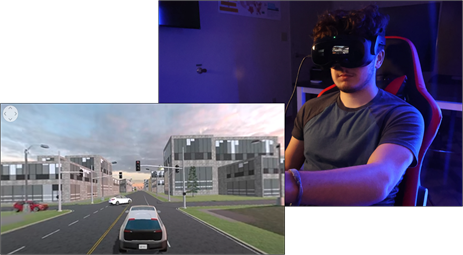
Smart communities and cities
Focus: Infrastructure solutions that advance sustainability, equity, and societal well-being.
Scope:
- Low-carbon, high-performance, and sustainable materials and structural systems
- Sustainable buildings and communities, including energy efficiency and circular economy approaches
- Infrastructure policy, education, and workforce development initiatives
- Community-engaged and inclusive infrastructure solutions
Recent Grants
- Offshore wind energy: for workforce training in offshore wind energy funded by NYS Offshore Wind Training Institute (OWTI). The project is led by Dr. Zhanjie Li and Dr. Andy Wolfe along with several faculty in mechanical engineering, engineering technology, and business. (Total funding: 2 projects combined ~$700k), 7/1/2022 – 6/30/2026
- Resiliency for multi-hazard scenarios: seismic and fire modeling for steel structure funded by NSF ROA with collaboration with Johns Hopkins University. This project is led by Dr. Zhanjie Li with a total funding of $35k. 5/1/2024 – 8/30/2026
- Climate Change Effects on Atmospheric Icing and Its Impact on Codes and Standards for Structural Design, National Institute of Standards and Technology (NIST), PI: Dr. Ahmed Abdelaal with the U.S. National Science Foundation National Center for Atmospheric Research (NSF NCAR), $397,410. 10/01/2024 – 09/30/2026.
- AI-Driven Learning for Construction Challenges in Civil Engineering Design, Agency: SUNY IITG, Amount: $30,000, PI, Dr. Asif Ahmed
- Advancing Climate-Informed Structural Design with Big Data and AI Using the SUNY AI Platform and Google Cloud, State University of New York (SUNY), PI: Dr. Ahmed Abdelaal, $75,000 (in-kind). 2025-2026
Recent Publications
- C. Ding, Y. Xia, D. Akchurin, H. B. Blum, Z. Li, B. W. Schafer, Flexural strength of advanced high strength steel lipped channels, Thin-Walled Structures, 218, Part C, 2026, 114112, https://doi.org/10.1016/j.tws.2025.114112
- Tye, M. R., McCrary, R. R., Stuivenvolt-Allen, J., Abdelaal, A., and Liel, A. (2025). “Evaluating the time of occurrence of selected global warming levels for CMIP5 and CMIP6 models”. NCAR Technical Note No. NCAR/TN-591+STR. National Center for Atmospheric Research, Boulder, CO. https://doi.org/10.5065/c62c-ay86
- Ahmed, A., Islam, M. A., Bin Alam, M. J., and Katikaneni, S. (2025). Seasonal Moisture Dynamics in Northeast Subgrade Soils: Insights from Central New York Instrumentation. In Geotechnical Frontiers 2025 (pp. 237-247), https://doi.org/10.1061/9780784485965.021
- Viteri, J.P., Pérez-Uribe, M., Borrero, S., & Henao, F. (2024). Uncovering Nuanced Poverty Differences Through Spatial Analysis: Insights from Colombia's Pacific Region. Sustainable Development, 0:1–16. (Scopus Q1) https://doi.org/10.1002/sd.70192
- Henao, F., Edgell, R., Sharma, A., & Olney, J. (2025). AI in Power Systems: A Systematic Review of Key Matters of Concern. Energy Informatics, 8, 76. (Scopus Q2) https://doi.org/10.1186/s42162-025-00529-1
- S. Jin, S. Adany, Z. Li, B. W. Schafer, (2025) From kinematics to forces: A novel constrained finite strip method for thin-walled member modal analysis, Journal of Constructional Steel Research, 235, 109917, https://doi.org/10.1016/j.jcsr.2025.109917
- A. Karimpour, A. Cottam, A. Altieri, E. Hanrahan II, Automated statewide estimation of crash-induced delay and queueing using crowdsourced data, Case Studies on Transport Policy, Volume 21, 2025, 101565, https://doi.org/10.1016/j.cstp.2025.101565
- Henao, F., Edgell, R., Sharma, A. et al. AI in power systems: a systematic review of key matters of concern. Energy Inform 8, 76 (2025). https://doi.org/10.1186/s42162-025-00529-1
- Y. Dai, S. Wang, M. Xiang, L. Yin, Z. Li, A 1D Spectral Approach for Efficient Modal Identification of Thin-Walled Members in Shell Finite Element Models, Engineering Structures, Volume 329, 2025, 119739 https://doi.org/10.1016/j.engstruct.2025.119739
- Gajan, S. and Kantor, C. (2025). Modeling of settlement of shallow-founded rocking structures using explainable physics-guided machine learning, Machine Learning with Applications, 21, 100702, https://doi.org/10.1016/j.mlwa.2025.100702
- Gajan, S. (2024). Predictive modeling of rocking-induced settlement in shallow foundations using ensemble machine learning and neural networks, Frontiers in Built Environment, 10, 1402619, https://doi.org/10.3389/fbuil.2024.1402619
Conference proceedings and Presentations:
- Bandi, S., Ahmed, A., and Hasnine, S. (2026). Harnessing Social Media Data for Natural Disaster Information: A Case Study on Hurricane and Wildfire Posts on Reddit. TRB Annual Meeting 2026, Washington, D.C.
- Bandi., S., and Ahmed, A. (2026). Advancing Subgrade Temperature Prediction Through Machine Learning-Based Tool Development. Paper accepted for TRB Annual Meeting 2026, Washington, D.C.
- Tye, M. R., Abdelaal, A., McCrary, R. R., Jones. K. (January 2026). Atmospheric Icing and Infrastructure Risk: Developing Engineering Extreme Loads. Paper presented at the 106th American Meteorological Society (AMS) Annual Meeting, Houston, Texas, U.S.A
- Abdelaal, A., Tye, M. R., McCrary, R. R., Jones. K., McCray, C., Kessenich, L., & Paquin, D. (December 2025). Atmospheric Icing and Infrastructure Risk: Insights from Climate Projections. Paper presented at the 2025 American Geophysical Union (AGU) Annual Meeting, New Orleans, Louisiana, U.S.A.
- McCrary, R. R., Kessenich, L., Tye, M. R., Abdelaal, A., Gore, M. (December 2025). Evaluation of Atmospheric Icing Events in NA-CORDEX WRF Simulations. Paper presented at the 2025 American Geophysical Union (AGU) Annual Meeting, New Orleans, Louisiana, U.S.A.
- A. Karimpour, A. Altieri, A. Cottam, E. Hanrahan. Automated Statewide Estimation of Crash-Induced Delay and Queueing using Crowdsourced Data. 105th TRB Annual Meeting, D.C., USA (January 2025).
- A. Altieri, A. Karimpour, “Automated Statewide Estimation of Crash-Induced Delay and Queueing using Crowdsourced Data”, Upstate NY Section ITE Annual Meeting, Buffalo, NY (Sep. 19th, 2024).
- A. Ahmed, Seasonal Moisture Dynamics in Northeast Subgrade Soils: Insights from Central New York Instrumentation, Geotechnical Frontiers 2025, Louisville, KY, March 2-5, 2025
- A. Ahmed, Harnessing Generative AI for Educators: Case Study of Accurate Wildfire Location Mapping, ASEE 2025
- W. Durgin, F. Henao, R. Edgell, The Future of Sustainable Aviation: Navigating the Sociotechnical Matters of Concern, AIAA Aviation Conference, July 2025, abstract accepted.
- Kazi Imran, Md Zahidul Haque, and Jiayue Shen, Artificial Intelligence and Machine Learning for Composite Materials Design, ASEE 2025
- Yu Niu, Zhanjie Li, Tara Hutchinson, Richard Emberley, Brian Meacham, Thomas Gernay, Numerical modeling of the post-earthquake fire performance of cold-formed steel members, Annual conference of Structural Stability Research Council (SSRC), April, 2025
- Carlos Diaz and Felipe Henao. A Bi-Objective Optimization Approach to Reducing Energy Poverty Through Biomass Gasification: The Case of Rural Colombia. I IBERIAN CONFERENCE ON MCDM/A (IMCDM/A) Universidade de Coimbra, 2025.
- A. Sekaran, M. Mandic, A. Untaroiu, B. Shanab, Assessing the Viability of Large-Scale Offshore Energy Generation Using Dual Rotor Vertical Axis Wind Turbines, ASME International Mechanical Engineering Congress and Exposition, November 17-21, 2024, Portland, Oregon.
- Gajan, S. and Kantor, C. (2025). Application of explainable theory-guided machine learning-based modeling to rocking foundations during earthquake loading. Proc. Geo-Extreme 2025 (ASCE), Long Beach, CA, November 2-5, 2025, https://doi.org/10.1061/9780784486498.012
Faculty member of the CSIS center with SUNY Poly faculty website:
Director: Dr. Zhanjie Li
Associate Director: Dr. Sivapalan Gajan, Dr. Tabiri Asumadu, Dr. Iulian Gherasoiu
SUNY Poly Faculty members:
Dr. Wole Soboyejo, Dr. Andy Wolfe, Dr. Bill Durgin, Dr. Aarthi Sekaran, Dr. Abolfazl Karimpour, Dr. Jiayue Shen, Dr. Kazi Imran, Dr. Shuang Tang, Dr. Juan Henao, Dr. Asif Ahmed, Mark Mattson, Dr. Se Jung Kim, Dr. Ahmed Abdelaal